


Personality assessments have jumped from fringe curiosity to mainstream HR strategy. In 2025, 76 percent of employers used a skills or personality test somewhere in the hiring funnel, yet most of those tests still focus on the individual, not the chemistry of the group they will join. The 2025 State of the Team report from TeamDynamics finds that 92 percent of employees are in tension with at least one of their team’s core behaviors, proof that mis-alignment is the norm, not the exception. When a single role draws hundreds of AI-polished résumés, seeing data on both the person and the squad helps recruiters spot real fit and cut through hype faster.
This guide breaks down ten workplace psychometric platforms, what they cost, and how to combine them for sharper hiring, development, and team cohesion..
TeamDynamics: Real-time X-ray for How a Team Works
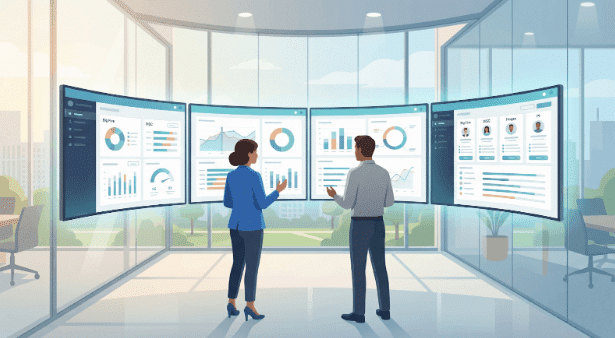
Most assessments profile individuals and hope the puzzle pieces fit later. TeamDynamics is a team personality assessment that starts with the group. A 10-minute survey places the team on four dimensions (communicating, processing, deciding, executing) and then maps each person’s style onto that shared grid.
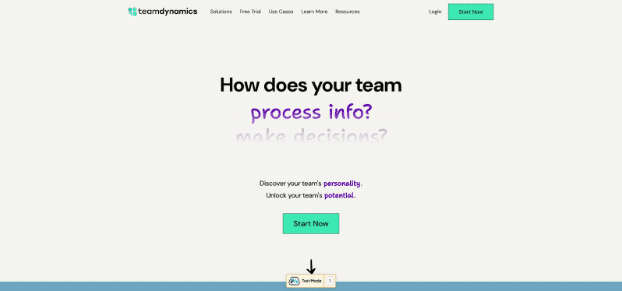
Inside the web dashboard you can jump from the overall “team type” to one-to-one tension points in seconds. If a squad shows fast-deciding but low-executing patterns, the tool suggests fixes such as silent brainstorming or shorter sprint cadences.
Speed is the other hook. Setup is self-serve (no facilitator or LMS required) and costs $39 per person for teams of 2–20, according to TeamDynamics’ self-serve pricing.
Research depth is still emerging, yet early reach is solid: the 2025 State of the Team report draws on thousands of anonymized team responses across seven continents. We use TeamDynamics as a live pulse check and pair it with individual tools like the Big Five or CliftonStrengths for longer-term coaching.
Use it when you need collaboration insight tomorrow morning, not after a week of workshops.
Big Five Inventories: the Scientific Baseline
When hiring stakes are high, industrial-organizational psychologists still reach for the Big Five personality test. A landmark meta-analysis found that conscientiousness correlates .22 with overall job performance across occupations (Barrick & Mount, 1991; confirmed by Hurtz & Donovan, 2000). The other four traits (openness, extraversion, agreeableness, and emotional stability) add nuance that interview panels often miss.
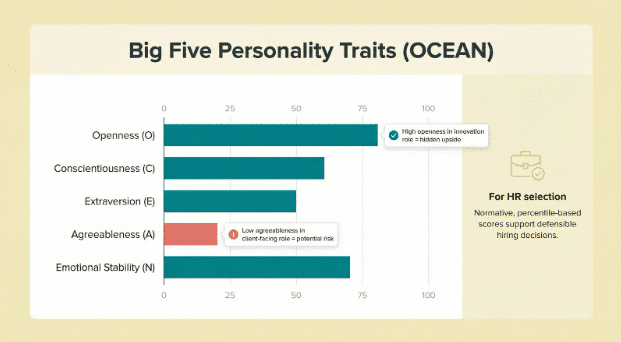
Most vendors build on that research core. The NEO-PI-R offers a 240-item deep dive prized in executive selection, while SHL’s OPQ trims administration time but feeds results into role-specific benchmarks. Free IPIP versions exist online; you trade psychometric polish for price.
Because the inventories report percentile scores against large norm groups, you can spot red flags early, such as bottom-decile agreeableness in a client-facing role, or hidden upside like top-quartile openness in an innovation post.
Candidates typically spend 15–35 minutes on the assessment. Reports land in your inbox with trait scores, sub-facet breakdowns, and plain-language cues such as “prefers clear structure.” Pair those insights with a structured interview, and you raise predictive validity without extending the timeline.
Pricing ranges from $0 (IPIP) to about $50 per applicant for an OPQ license, which is small change next to the cost of a mis-hire. Because the tools are normative and empirically validated, legal teams prefer them over trendier type tests.
The trade-off is engagement; percentile bars lack the instant “I’m an ENFP” buzz. Brief hiring managers first, then share highlights with candidates post-offer to keep momentum high.
Use a Big Five inventory when accuracy outweighs entertainment. It is the yardstick every other selection tool claims to match and the one you can defend in court or the boardroom.
Hogan Personality Suite: Strengths That Sell, Risks You Can’t Ignore
Every leadership strength has a shadow. The Hogan personality assessment suite is built to reveal both sides through three linked tools:
- Hogan Personality Inventory (HPI) – day-to-day style (e.g., ambition, sociability, prudence).
- Hogan Development Survey (HDS) – derailers that surface under pressure.
- Motives, Values, Preferences Inventory (MVPI) – what energizes or drains a leader.
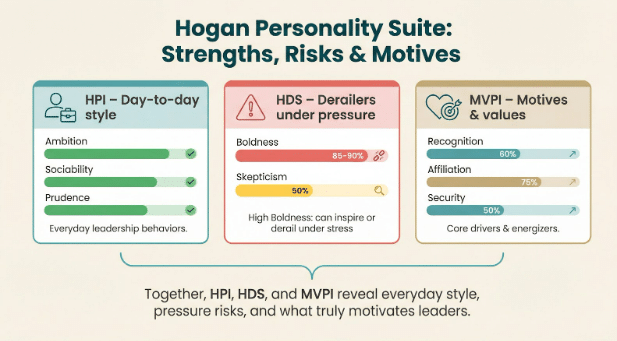
The full battery takes about 45 minutes, and the report pairs green bars for strengths with yellow or red alerts for derailers. For example, a sales VP who scores high on Boldness may rally teams yet steamroll peers when stress rises, a cue to probe further in interviews and build a coaching plan from day one.
Hogan’s credibility rests on data. Meta-analytic work shows HPI traits predict leadership effectiveness and safety outcomes (Hogan & Holland, 2003), and more than 75 percent of Fortune 500 companies use the suite in their talent strategy. Volume studies now cover 13 million assessments across 50 countries.
Pricing sits at the premium end, $300–$500 per participant plus a certified feedback session, yet that is modest next to the cost of a failed executive hire. Because the tools are normative and backed by extensive fairness analytics, legal teams view them as defensible if hiring decisions face scrutiny.
Reach for Hogan when the role carries P&L responsibility or public visibility. The suite shows you not just the polished résumé but also the pressure cracks, so you can address them before they widen.
Predictive Index: Instant Insights That Scale Across the Hiring Funnel
Candidates finish the Predictive Index Behavioral Assessment in roughly six minutes. Two free-choice adjective lists reveal four core drives: dominance, extraversion, patience, and formality. Recruiters embed the link in the first screening email, collect data while résumés stack up, and join kickoff calls with behavioral profiles already mapped to a role target they set in the platform.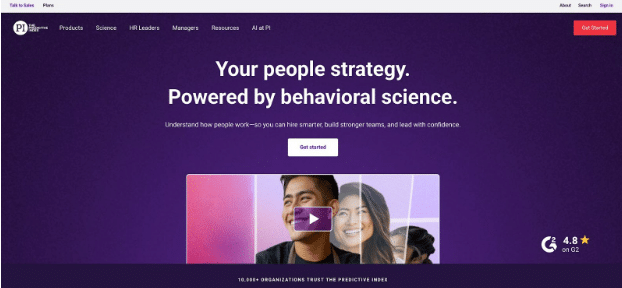
Role targets matter. A slider adjusts how much dominance or patience fits this sales job in this culture, and the dashboard shows the overlap between a candidate’s pattern and that target, clarity even non-HR stakeholders grasp at a glance.
PI also works at the team level. Team Discovery plots every employee on one canvas, compares that collective pattern to the project’s behavioral “recipe,” and flags gaps in seconds.
Licensing flips the cost model. Instead of paying per test, organizations buy an annual subscription with unlimited assessments. Hiring-focused plans start at about $7,550 per year for mid-size companies, a cost-effective path for high-volume recruiting or rotational programs.
Validity keeps pace with speed. PI’s “Validity Vault” lists more than 350 criterion studies; 94 percent show significant links between PI factors and job performance across 11 industries.
One caution: insight depth rises with user training. Nominate an internal PI Champion and budget time for the platform’s certification path so hiring managers move beyond pattern labels and avoid oversimplification.
Reach for Predictive Index when you need scientifically grounded behavioral data at enterprise speed, and plan to weave those insights through every talent decision, not just the offer letter.
CliftonStrengths: Engagement Powered by What People Already Do Best
Gallup’s CliftonStrengths assessment starts from a simple premise: focusing on weaknesses squanders talent. The online tool ranks 34 talent themes and spotlights an employee’s top five, using everyday labels like Achiever, Learner, and Empathy that spark instant conversation.
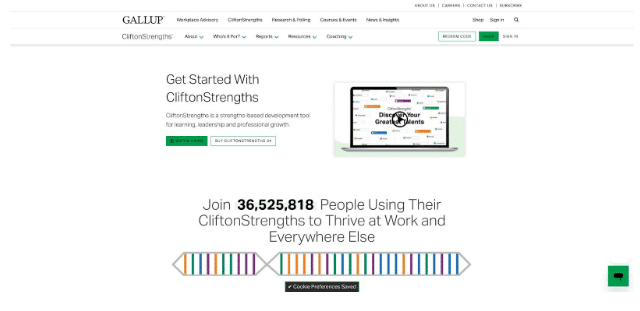
The assessment takes about 30 minutes and lives inside Gallup Access, where reports, short videos, and tip sheets appear the moment a user clicks “submit.” A new hire who learns that Relator tops her list finally understands why one-to-one coffee chats recharge her more than group brainstorms.
Strengths data also scale. Load a team into the Strengths Grid, and overlap or gaps jump out. Gallup’s 49,000-work-unit meta-analysis shows that teams receiving strengths-based development report 29 percent higher profit and 72 percent lower turnover in high-turnover organizations.
Cost stays modest: the Gallup Store lists $24.99 for a Top 5 access code and $59.99 for the full 34-theme report. Because CliftonStrengths is non-comparative, it avoids adverse-impact concerns; we deploy it after hire or during engagement initiatives, not as a gatekeeper.
Limitations remain. The tool won’t flag derailers or predict quota-crushing sales performance. Pair it with a normative assessment when selection rigor matters, and use it solo when morale dips or leadership wants a shared, positive language to coach and celebrate progress.
DiSC Assessment: Color-coded Clarity for Everyday Teamwork
When daily collaboration stalls, the DiSC personality assessment offers a memorable shorthand. One adaptive questionnaire sorts each employee into four behavioral styles (Dominance, Influence, Steadiness, or Conscientiousness) and displays the result in a bold, color-coded circle.
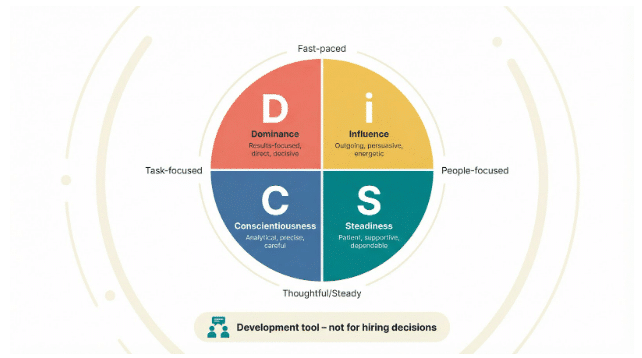
Managers appreciate the straight-talk reports. A high-D learns she values results and direct language, while a high-S finally sees why abrupt change drains him. The Catalyst platform even serves side-by-side comparisons so two colleagues can preview friction points before a sprint begins.
Reliability is strong for a development tool: internal-consistency alphas range from .84 to .90, and learners rate their profile as 90 percent accurate. Because DiSC is ipsative, we keep it out of formal selection. Its power lies in a shared vocabulary that sparks real-time coaching. Ask the high-C analyst for detail instead of pushing for instant answers. If you’re still weighing DiSC against other team personality assessment tools, this side-by-side comparison of seven platforms offers a quick, practical benchmark.
Cost averages about $60 per participant (volume pricing varies by reseller). No certification is required, so HR can schedule a lunch-and-learn today and see conversation shifts by next week.
Reach for DiSC when smooth dialogue matters more than psychometric depth, and you want every employee, regardless of role, to leave the workshop saying, “Now I get how we work together.”
Myers-Briggs Type Indicator: the Gateway Language of Personality
Ask a room of employees to name a personality type and you will hear ENFP, ISTJ, maybe INFJ, within seconds. That instant name recognition is the MBTI personality assessment’s power: it turns abstract preferences into a four-letter badge people remember and use in daily shorthand.
The MBTIonline Teams package keeps the classic 93-item inventory but automates everything after. Participants click through on mobile, then watch a colorful “type table” light up with everyone’s letters. Within minutes a project team sees why an ENTJ pushes for rapid decisions while an ISFP prefers reflection.
We use MBTI as an icebreaker, not a hiring screen. Test–retest studies show its preference scales hold .81 to .86 reliability over 1 to 15 weeks, yet the instrument is less predictive of job performance than trait-based tools. That is fine; our goal here is shared vocabulary. When a marketing lead learns her copywriter is an INFP, she frames feedback around values and authenticity, and revisions run smoother.
Managers also get micro-courses such as three-minute clips on “Collaborating with INTJs” or “How ENFPs handle conflict.” They slot easily into a lunch-and-learn, keeping momentum long after the reveal.
Cost is $99.95 per person for MBTIonline Teams. No certification is required, though a seasoned facilitator can turn fun facts into actionable workflow tweaks.
Use MBTI to open conversations, build empathy, and give teams a low-pressure first taste of personality science, then pair it with a validated assessment when you need predictive power.
Enneagram: Motivations Under the Surface
While DiSC shows how people act, the Enneagram personality test explores why. It sorts personalities into nine archetypes (Reformer, Achiever, Peacemaker, and six others), each driven by a core motivation and signature fear. That deeper lens often increases empathy: team members see what fuels a colleague’s perfectionism or a manager’s need for control.
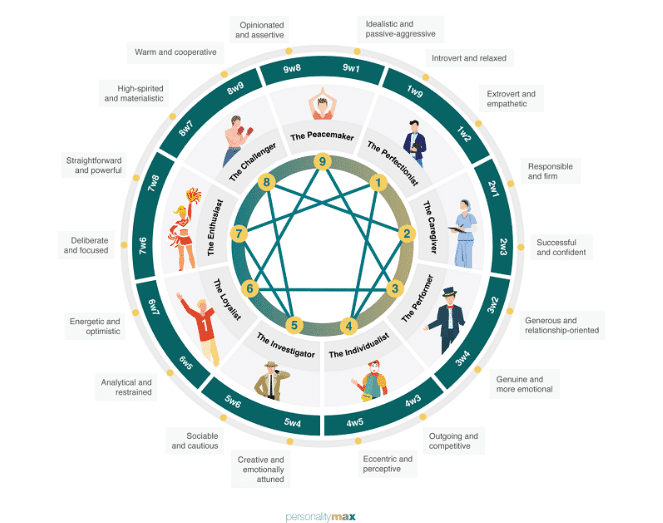
Workplace editions add structure. Reports chart each type along stress-and-growth lines and flag how behaviour shifts when deadlines loom versus when support is strong. A Type 3 Achiever may chase recognition under pressure but grows by pausing to value relationships, insights that feed coaching conversations trait tools can miss.
Options range from free 100-item surveys to enterprise platforms like iEQ9. The professional iEQ9 Enneagram takes 15–20 minutes and produces a 42-page workplace report; individual licenses list at $120, with a shorter $60 version for personal use.
Validation research is lighter than for Big Five or Hogan, yet recent studies report median internal-consistency alphas around .70 to .78 for the nine-type scales. We therefore deploy Enneagram strictly for development, never selection, and remind teams that type fluidity is normal to prevent labelling.
Use the Enneagram when the culture goal is deep self-awareness and psychological safety. It opens discussions about motive and stress that other assessments leave untouched, turning surface-level harmony into genuine understanding.
Conclusion
Personality assessments have become a practical advantage for HR teams navigating crowded talent markets and increasingly complex team structures. When résumés are polished by AI and interviews reward confidence as much as competence, structured psychometric data adds a layer of signal that intuition alone cannot provide. Used correctly, these tools help organizations see beyond individual capability to understand how someone will operate inside a real team, under real pressure.
The most effective HR strategies do not rely on a single assessment or framework. Instead, they match the tool to the decision at hand. Trait-based, normative assessments such as Big Five inventories, Hogan, or the Predictive Index are best suited for hiring and high-stakes leadership decisions where accuracy, benchmarking, and defensibility matter. Development-focused tools like CliftonStrengths, DiSC, MBTI, and the Enneagram excel once someone is inside the organization, creating shared language, improving communication, and supporting coaching conversations that sustain engagement over time.
One of the clearest shifts in modern talent strategy is the move away from evaluating people in isolation. Most roles succeed or fail based on team dynamics, not individual brilliance. That is why pairing individual assessments with a team-level lens, such as TeamDynamics, can reduce misalignment, accelerate onboarding, and surface collaboration risks early—before they show up as missed deadlines or quiet disengagement. Understanding how a group communicates, decides, and executes provides context that individual profiles alone cannot capture.
The real value of personality assessments emerges only when insights lead to action. The strongest HR teams use results to sharpen interview questions, tailor onboarding plans, guide manager coaching, and set explicit team norms. When personality data informs how people actually work together, rather than serving as labels or static reports, it becomes a measurable driver of performance, retention, and trust.
In the end, no assessment replaces judgment, but the right combination of tools can dramatically improve it. Organizations that treat personality data as decision support—integrated thoughtfully into hiring, development, and team design—gain a clearer view of fit, faster alignment, and teams that work better by design rather than by chance.
FAQ
1) What’s the best personality assessment for HR professionals overall?
There isn’t one universal “best.” The best tool depends on your HR use case:
- Hiring/selection: Big Five inventories, Hogan, Predictive Index
- Leadership risk + derailers: Hogan
- Team effectiveness + friction: TeamDynamics, DiSC, Belbin
- Engagement + coaching language: CliftonStrengths, MBTI
- Motivation + deeper self-awareness: Enneagram
2) Can we legally use personality tests in hiring?
Often yes—if the tool is job-relevant, consistently administered, and used as one data point (not the sole decision-maker). In general, HR teams reduce risk by:
- choosing assessments with documentation and role relevance,
- using structured interviews and job-related criteria alongside test results,
- monitoring for adverse impact and fairness,
- keeping the process consistent across candidates for the same role.
(Always run your approach by legal counsel, especially for regulated industries or high-stakes roles.)
3) Which tools should NOT be used for hiring?
As a general practice, avoid using development-first or non-normative/ipsative tools as selection gatekeepers. That includes DiSC, MBTI, CliftonStrengths, and Enneagram. They can be fantastic for development, but they’re not built for predictive selection decisions.
4) What’s the difference between “normative” and “ipsative,” and why does it matter?
- Normative assessments compare an individual to a broader norm group (useful for selection and benchmarking).
- Ipsative assessments often force trade-offs (e.g., “pick what’s most like you”) and don’t compare people on a consistent scale—better for development than hiring.
If you want defensibility and comparability for hiring, normative tools are usually the safer choice.
5) How many assessments is too many in the hiring funnel?
A good rule: one short assessment early or one deeper assessment late, not both—unless you’re hiring for a high-impact role where the ROI is clear. Candidates drop when the process feels like a test gauntlet. Optimize for:
- minimal time burden (especially early),
- clarity on why you’re assessing,
- sharing meaningful feedback post-offer when appropriate.
6) What’s a smart way to combine personality tools without creating redundancy?
Use one tool per purpose:
- Speed screen: PI (behavioral drives)
- Selection accuracy: Big Five inventory (traits, norms) or Hogan (depth + derailers)
- Team fit + onboarding: TeamDynamics (how the team works + tension points)
- Development language: CliftonStrengths (strengths coaching) or DiSC (communication)
Avoid stacking tools that measure the same thing in different packaging.
__
__
Did you enjoy this post? If you found it helpful, feel free to share it with your friends! We’d love to hear your thoughts—reach out to us at contact@personalitymax.com. We’re always happy to answer any questions.
Please note that PersonalityMax.com is not a source of financial, legal, or medical guidance.
Read this Next

Rachel is a content specialist passionate about writing and human interactions. She enjoys collecting and share valuable content with our community, helping members on their own self discovery journey.